How the Vikings Are Manufacturing Space for Jefferson and Aaron Jones
Minnesota’s last three completed games show an offense that creates room by spreading danger around, then letting Jefferson and Jones punish the defense for overreacting.
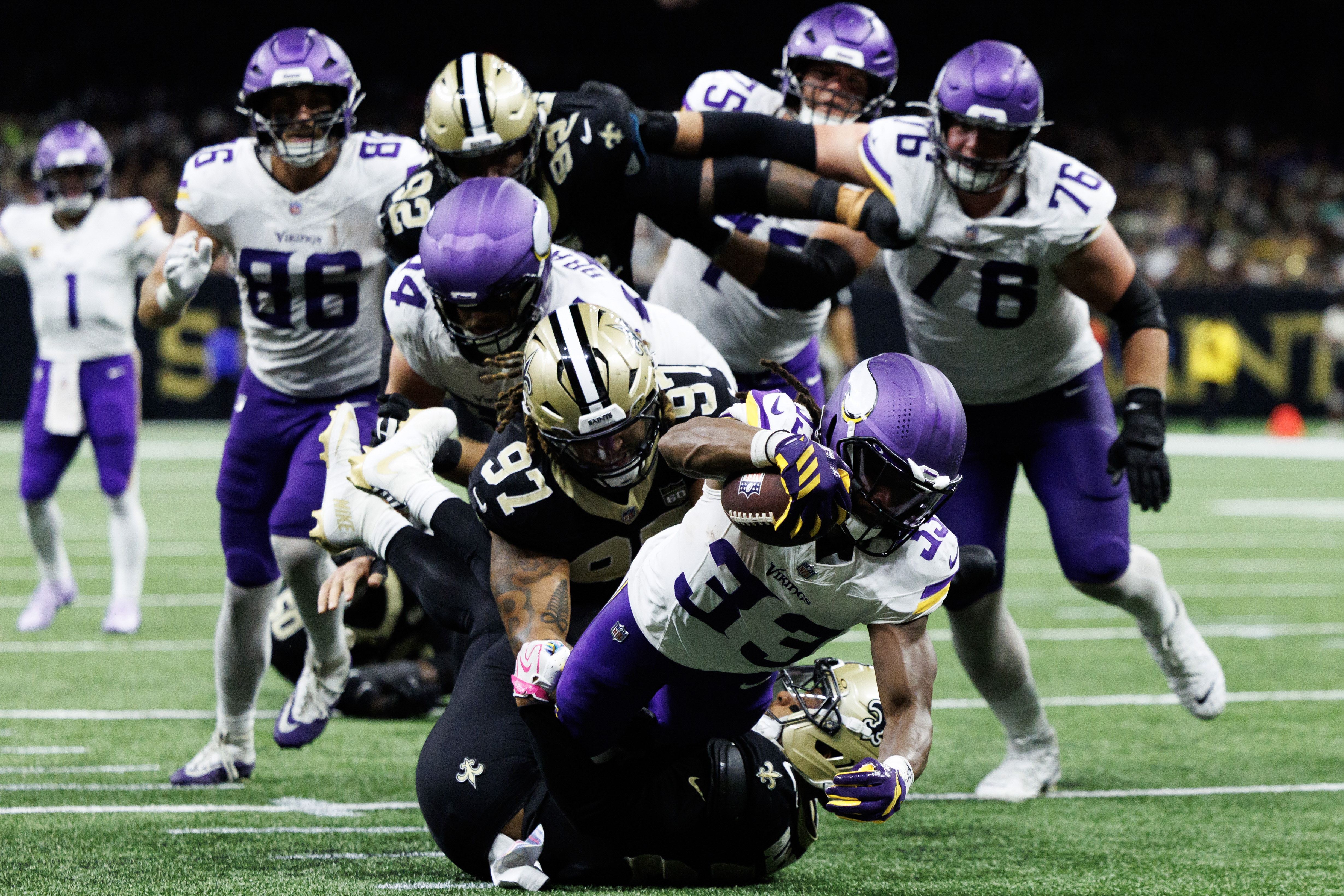
The clearest pattern is balance, not one magic alignment
The Vikings’ latest three completed games point to a simple offensive idea: they are not creating space for Justin Jefferson and Aaron Jones by lining up the same way every snap, but by forcing defenses to honor several threats at once. In the most recent two games alone, Minnesota spread production to multiple targets when Jefferson was limited or absent, then leaned back into his gravity when he returned. That mix, along with steady work from Jones, is what keeps defenses from loading up on one receiver or shrinking the middle of the field. The official reports do not spell out every formation or motion detail on these plays, so the safest read is that Minnesota is using layered threats and timing to open windows rather than one obvious structural trick. [1] [2] [3]
Without Jefferson, the defense still has to cover everywhere
Week 4 against Miami is the best example of how the Vikings can still create room even when Jefferson is unavailable. The offense finished with Kyler Murray going 27 of 37 for 247 yards, T.J. Hockenson catching 13 passes, and Aaron Jones handling 20 carries for 94 yards. That kind of distribution matters because it keeps linebackers and safeties from cheating toward one area of the field. If a defense has to respect Jones inside, Hockenson underneath, and Jordan Addison outside, the passing lanes get wider even before the ball is snapped. [3]
The clearest snap in that game came late, when Murray threw a 27-yard pass to Addison with 4:22 left and fit the ball over a linebacker into a pocket surrounded by defenders. That is a classic spacing win. Addison’s route did not need a massive cushion to work; it needed the defense to be stretched just enough that one window opened in the second level. Hockenson’s six fourth-quarter catches helped in the same way by giving the quarterback a reliable outlet when the defense tightened up. [3]
Jefferson changes the stress points when he is back on the field
The Week 3 win at Tampa Bay shows the other side of the equation. Jefferson left with an ankle injury and did not return, and the offense immediately shifted toward Addison. Minnesota still found a long touchdown, with Addison producing a 41-yard score after Jefferson exited. The value there is not just the big play itself. It is the way Jefferson’s absence changed the defensive math, giving another receiver more room to win vertically. When one elite target leaves, the coverage can tilt, but the Vikings still had enough speed and route value to keep the defense from collapsing entirely on Jones or sitting on short throws. [1] [4]
Jones benefits when the defense has to account for both the run and the receiver tree
Week 5 at New Orleans tied the whole picture together. Jefferson led the team with 79 receiving yards on six catches, Jones added 113 rushing yards on 25 carries, and Minnesota spread the ball to 10 different players. That is the kind of offensive spread that makes a defense decide what it wants to take away first. If the secondary leans toward Jefferson, Jones has more room to run. If the front sells out against Jones, Jefferson has a better chance to win a route late in the down or on a key third-down throw. [2]
The final touchdown drive in that game is the most useful play for fans to remember. Murray escaped for an 18-yard scramble on third-and-10, and three plays later he found Jefferson for the touchdown on third-and-6. Even without a full diagram of the route concept, the sequence tells the story: the quarterback’s run threat changed how the defense had to defend the next snap, and Jefferson then capitalized on the loosened picture. That is how spacing often works in real time. One threat creates hesitation, and the next one gets the cleaner window. [2]
What to watch next
The most important thing for Vikings fans to track in the next game is whether Minnesota keeps forcing defenses to choose between Jefferson, Jones, and the middle of the field. If the Vikings can keep using motion, layered routes, and enough complementary targets to prevent constant double teams, Jefferson should keep seeing favorable third-down looks and Jones should keep finding lighter boxes and cleaner lanes. The next step would not be a new identity. It would be the offense repeating the same stress points until opponents prove they can stop all of them at once. [2] [3] [4]
Sources and further reading
Reporting and context used for this article:
Related stories
Vikings Open 2026 With a Mostly Clean Injury Sheet and a Real Chance to Set the Tone
Minnesota’s Week 1 home opener against Green Bay arrives with limited injury concerns and a chance to turn early stability into an opening statement.